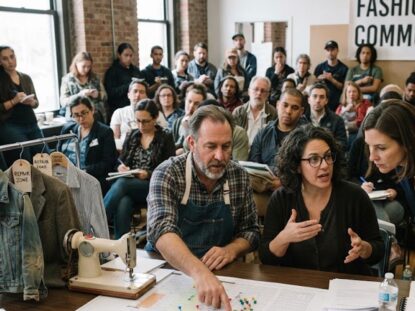
The intersection of fashion, health, and politics is shaping public debates about regulation, labor, and sustainability.
Advocates and policymakers are increasingly attentive to how clothing supply chains affect community well-being and environmental risks.
Voters respond to visible commitments on safety, fair work, and waste reduction as part of broader civic expectations.
This article outlines key political dynamics and practical approaches for engaging stakeholders across sectors.
Political Polarization and Public Health
Political polarization often frames fashion policy as a contest between economic liberty and heavy-handed regulation, which can distract from practical health concerns. Many debates ignore shared priorities such as exposures to harmful chemicals, workplace safety, and the health impacts of textile waste. Public health research that focuses on measurable outcomes and local community impacts can help reframe the conversation around tangible risks and benefits. Clear evidence gives elected officials and regulators tools to design policies that protect people without unnecessarily burdening small enterprises.
Building trust requires transparent communication of risks and pragmatic timelines for compliance. Collaborative pilot programs between government, industry, and health agencies can demonstrate scalable solutions and reduce partisan friction.
Regulation, Labor, and Environmental Policy
Effective policy connects labor standards, environmental protection, and consumer safety into coherent regulatory frameworks rather than treating each issue in isolation. Standards for responsible sourcing, chemical safety limits, and waste management create predictable expectations for manufacturers and retailers. Incentives such as grants for cleaner production and penalties for noncompliance can shift market behavior while protecting workers and communities. Regulatory design that includes clear metrics and phased implementation improves enforceability and market adaptation.
Policymakers should prioritize data collection and third-party verification to ensure accountability. When the rules are clear and fairly enforced, businesses can innovate and compete on sustainability.
Mobilizing Voters Through Sustainable Design
Civic engagement around sustainable fashion demonstrates how cultural movements influence policy agendas and electoral choices. Public campaigns that highlight worker rights, environmental impacts, and product safety translate complex issues into relatable stories for voters. Designers, consumer groups, and advocacy organizations can amplify policy proposals by linking them to community health outcomes and local job quality. Events and educational initiatives that showcase practical alternatives make it easier for citizens to support constructive policy changes.
Effective outreach emphasizes concrete benefits such as reduced pollution, safer workplaces, and local economic resilience. By connecting design choices to everyday health and wellbeing, advocates can broaden support across demographic groups.
Conclusion
Integrating public health considerations into fashion policy creates clearer priorities for both policymakers and voters.
Practical, evidence-based regulation can protect communities while enabling sustainable industry growth.
Cross-sector collaboration and transparent metrics will make policies more durable and broadly supported.