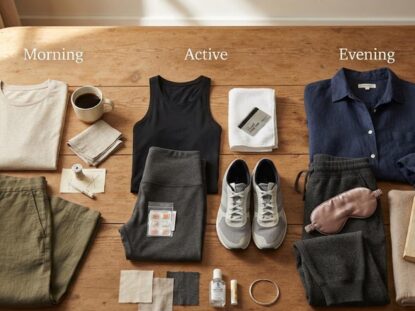
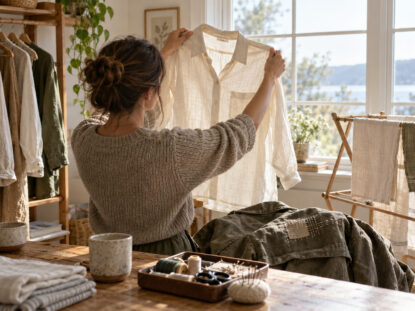
Clothing can do more than look good: the right pieces quietly reduce friction, improve posture, and make daily movement easier. Small changes — a gentler fabric, a smarter waistband, or a slightly different cut — add up to noticeably better comfort over weeks and months. This piece focuses on practical choices you can make today so your clothes work with your life instead of against it. No dramatic overhaul required; start with a few reliable items and build from there.
Choose Fabrics That Work With Your Body
Start by favoring fabrics that breathe and move. Natural fibers blended with a small percentage of stretch keep shape while allowing airflow; they handle heat and sweat better than dense synthetics. Look for tightly woven knits in tops and dresses that drape rather than cling, and select trousers with a bit of elastane for comfort at the hips and knees. Fabric weight matters too: lighter weights for high-activity days, mid-weight for cooler conditions.
Testing fabric against your skin will tell you more than any label. If a material irritates or traps heat during a short try-on, it’s unlikely to become a favorite. Choose pieces you can wear across several activities and seasons.
Prioritize Fit Over Size Labels
Fit affects comfort more than any number on a tag. A slightly roomier shoulder or a higher-rise waistband can prevent chafing, pinching, and constant adjustment. Pay attention to points of contact: underarms, waistbands, and the tops of shoes often betray poor fit first. Tailoring inexpensive staples—hemming pants, taking in side seams, or shortening sleeves—yields a more comfortable wardrobe without replacing everything.
When shopping, move: sit, raise your arms, and walk a few steps. Feel how garments behave in motion rather than judging only by how they hang on a hanger. Small tailoring tweaks are worth the investment for daily ease.
Design for Movement and Layering
Clothes that allow a full range of motion make routine tasks less tiring. Loose elbows, gussets in activewear, and skirt hems that clear the knees reduce restriction. Layering extends the usefulness of each piece: a breathable base layer, a mid-layer for insulation, and a light outer layer for wind or drizzle. Choose closures and hems that are adjustable—drawcords, elastic cuffs, and wrap styles are quietly flexible.
- Use a soft camisole or tee as a stable base.
- Keep a stretch blazer or cardigan for posture-friendly structure.
- Opt for adjustable waists on pants and skirts.
Thoughtful layering keeps you comfortable across changeable days and minimizes the number of items you need to switch out.
Conclusion
Comfortable dressing is a series of small, sensible choices rather than a dramatic style shift. Focus on fabric, fit, and freedom of movement when you shop or alter pieces. Over time, these decisions create a wardrobe that supports your day with ease and looks intentional without effort.