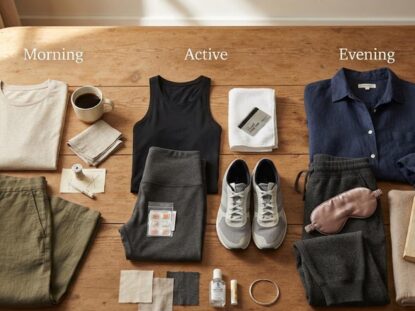
Balancing personal style with wellbeing starts in the closet. Small choices about fabrics, fit, and daily routines can influence comfort, confidence, and even physical health. A healthier wardrobe supports movement, reduces irritation, and promotes mindful consumption. This article explores practical ways to align fashion choices with lifestyle goals. Approaching garments with purpose reduces impulse buys and supports long-term wellbeing.
Why mindful dressing matters
Mindful dressing means selecting clothes that suit your body, activities, and climate rather than chasing trends that sacrifice comfort. When garments fit well and allow movement, you reduce strain and feel more at ease during daily tasks. Clothing that breathes and stretches appropriately can prevent skin irritation and maintain posture. Beyond physical benefits, intentional outfits often boost confidence and reduce decision fatigue. Assess how clothes affect your daily energy and adjust accordingly.
Consider outfits that match your typical day and occasional demands. Thoughtful dressing creates a foundation for healthier routines.
Materials and comfort: choosing fabrics
Fabric choice plays a central role in comfort and longevity. Natural fibers like cotton, linen, and certain wools can offer breathability and temperature regulation, while modern blends add stretch and durability. Pay attention to texture and seams; smoother finishes and flat seams help prevent chafing during long wear. Investing in higher-quality pieces often means fewer replacements and a smaller environmental footprint. Consider blended textiles that balance performance with natural comfort.
Test fabrics against your skin and consider care requirements before buying. Prioritizing comfort leads to garments you reach for repeatedly.
Practical habits for sustainable style
Developing routines around laundry, repairs, and mixing basics helps stretch a wardrobe without excess. Wash garments according to care labels, mend small issues promptly, and learn simple alterations to extend use. Embrace a capsule approach by building versatile layers and neutral anchors that work across seasons. Proper storage and rotating items also maintain their shape and function longer. Scheduling spot checks for wear and seasonal edits keeps choices intentional.
Small habits reduce waste and keep your closet functional. Over time, these practices support both wellbeing and responsible consumption.
Smart shopping: planning purchases
Approach shopping with a checklist focused on need, fit, and care rather than impulse. Researching brands’ material descriptions and customer feedback helps identify durable options. Try items on when possible, or verify return policies for online purchases to avoid waste. Prioritize versatile pieces that combine with items you already own to maximize outfits. Setting a budget for intentional buys prevents overspending and builds a cohesive wardrobe.
Mindful shopping translates choices into lasting value. Over time these decisions reduce clutter and increase satisfaction.
Conclusion
A healthier wardrobe supports comfort, confidence, and sustainability. By choosing suitable materials, prioritizing fit, and practicing simple care habits, you can make fashion work for daily life. Start with one mindful change and build a wardrobe that serves your wellbeing.