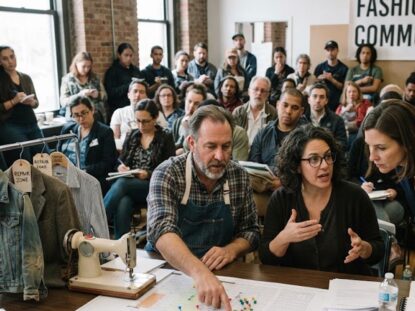
Cities and towns set rules and budgets that quietly steer what people buy and wear. Local governments influence textiles through procurement choices, zoning rules, waste systems, and support for small makers. Those decisions ripple into local jobs, public health, and the environmental impact of clothing. Paying attention to these levers gives residents practical tools to shape fairer, cleaner local fashion systems.
Public Purchasing and the Power of Demand
When a city chooses suppliers for uniforms, event merchandise, or facility linens it creates predictable demand that can reward ethical manufacturers. Procurement policies that score suppliers on labor practices, material health, and repairability nudge vendors to improve standards. Even modest language in contracts — requiring transparent supply chains or limiting hazardous chemicals — can shift a buyer market over time. Procurement is not just administrative; it is a visible lever that can anchor higher standards for local industry.
Officials can pilot programs with local makers or cooperative suppliers to test standards before scaling. Those pilots reduce risk while signaling market preference for responsible production.
Zoning, Infrastructure, and Local Textile Economies
Zoning and permitting decide where sewing workshops, repair cafes, and small retail can operate, which in turn shapes a city’s capacity for making and mending garments. Allocating affordable workspace and supporting small-scale manufacturing encourages entrepreneurship and shortens supply chains. Municipal investments in textile collection points and recycling infrastructure reduce litter and make circular options more accessible for residents. Thoughtful infrastructure planning turns stray clothing waste into local economic opportunity.
Practical steps such as mixed-use zones, pop-up market permits, and consolidated drop-off sites help stitch together a functioning local textile economy. These moves are low-cost compared with downstream environmental and social harms.
Regulation, Incentives, and Community Standards
Local regulation can set baseline protections for garment workers, require better labeling at markets, or limit single-use promotional giveaways at public events. Financial incentives — small grants, tax relief, or technical assistance — help small brands meet higher standards without folding under cost pressure. Public education campaigns that highlight repair, care, and purchasing choices change consumer norms over time. Together, rules and incentives create a nudging environment where healthier and fairer options become easier choices.
Transparency matters: clear reporting and community input keep policies responsive and credible. When constituents see tangible benefits, political support for progressive measures grows.
Conclusion
Local governments hold a surprising set of tools that influence fashion markets, worker conditions, and environmental outcomes. Small, targeted policies — from procurement to zoning to incentives — add up to measurable change in what gets made, sold, and discarded. Voters and officials who focus on these levers can create fashion systems that serve community health and local prosperity.