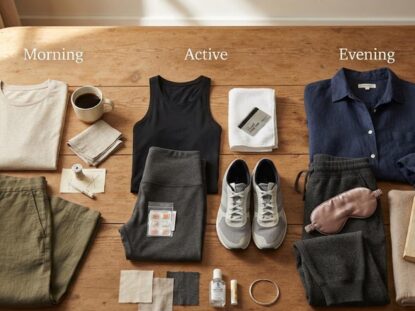
Creating a wardrobe that supports both your health and your sense of style begins with intentional choices rather than quick trends. Prioritizing comfort, breathability, and functional design can reduce waste while improving daily wellbeing. Small changes in selection and care habits lead to fewer purchases and more satisfaction from what you already own. This approach blends sustainable thinking with practical living to keep your closet useful and joyful for longer.
Assessing Your Wardrobe
Start by taking an honest inventory of what you currently wear and why you might be avoiding certain pieces. Look for gaps in functionality, seasonality, and fit rather than chasing novelty. Consider how each item makes you feel and whether it supports the activities you regularly do. This helps you identify key pieces worth investing in and items that should be mended, donated, or recycled.
- Try a one-month challenge wearing only selected items to reveal true needs.
- Document outfits that make you feel confident and comfortable.
By basing decisions on real use, you reduce impulsive buying and build a clearer sense of personal style. That clarity supports purchases that add value instead of clutter.
Choosing Fabrics and Fits
Select fabrics that balance durability with comfort, such as tightly woven natural fibers and blended textiles designed for longevity. Fit matters as much as material: well-fitting garments require less alteration and maintain their shape over time. Pay attention to breathability and ease of movement, which directly affect daily comfort and health. Investing slightly more in timeless cuts and stable fabrics often saves money and effort in the long run.
- Favor classic silhouettes that can be styled multiple ways.
- Look for fabric care labels and choose items compatible with your laundering habits.
Thoughtful fabric and fit choices reduce the need for frequent replacements and keep your closet functional across seasons. Prioritizing versatility makes outfits easier to assemble and maintain.
Care, Repair, and Rotation
Simple care routines significantly extend the life of clothing: follow washing instructions, avoid excessive heat, and use gentle detergents when appropriate. Learn basic repairs like sewing buttons, patching small holes, and reinforcing seams to postpone disposal. Rotating garments prevents concentrated wear on favorites and helps maintain overall garment integrity. These practices minimize waste and promote a more mindful relationship with your belongings.
- Create a repair kit with needles, thread, and fabric glue.
- Schedule seasonal wardrobe reviews to refresh and rotate items.
Regular attention to maintenance builds confidence and reduces replacement cycles. Over time, these habits create a curated wardrobe that supports both health and style.
Conclusion
Building a mindful wardrobe is an investment in comfort, sustainability, and long-term satisfaction. Practical choices around assessment, fabric, and care reduce waste and improve everyday wellbeing. Adopt small, consistent habits to create a closet that truly serves your life.