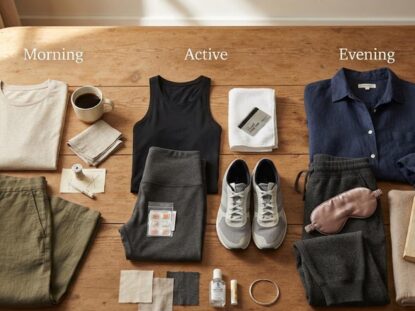
Our relationship with clothing affects more than appearance; it influences comfort, confidence, and environmental impact. Adopting sustainable wardrobe habits supports personal well-being while extending the life of garments. Small, intentional choices—about fabric, fit, and care—create a functional closet that reduces waste and stress. This article offers practical steps to build a healthier, more stylish approach to dressing.
Choosing Fabrics That Support Comfort and Longevity
Selecting the right fabrics balances comfort, durability, and maintenance needs. Natural fibers like cotton, linen, and wool often offer breathability and long-term wear, while modern blends can enhance stretch and resilience. Consider how fabric handles moisture, heat, and repeated washing when planning garments for daily life. Prioritize materials that feel good on your skin and perform well over time.
Look for tightly woven textiles and finished seams when assessing durability. Testing a small movement—stretch and recovery—can reveal how a piece will age. Investing slightly more in high-quality fabric pays off through fewer replacements and better day-to-day comfort.
Building a Capsule Wardrobe for Practical Style
A capsule wardrobe reduces decision fatigue and encourages mindful purchasing. Start by identifying versatile base pieces that coordinate across multiple outfits, then add seasonal accents to refresh your looks. Aim for a limited palette and mix of textures to maximize outfit combinations without excess. This approach supports consistent style and simplifies morning routines.
Create a short list of essentials—well-fitting trousers, a neutral jacket, and adaptable tops—and purchase intentionally. Each new item should serve at least three different outfit ideas to justify its place in the closet. Over time, the capsule evolves with thoughtful replacements rather than impulsive additions.
Care, Repair, and Maintenance to Extend Garment Life
Proper care preserves fabric integrity and appearance, reducing the need to buy replacements. Follow label instructions, use gentle detergents when appropriate, and avoid excessive heat during washing and drying. Simple repairs—replacing buttons, fixing seams, or mending small holes—can restore garments quickly and cheaply. Making maintenance a routine habit keeps clothing looking and performing better for longer.
- Wash less frequently when garments are not soiled.
- Air dry to reduce fiber breakdown from heat.
- Schedule a monthly check for small repairs.
Organize a care kit with basic tools like thread, spare buttons, and a gentle stain remover. Learning a few simple mending techniques saves money and supports a more sustainable wardrobe mindset.
Conclusion
Adopting sustainable wardrobe habits enhances comfort, reduces waste, and clarifies personal style. Small, consistent choices about fabrics, pieces, and care yield long-term benefits for both well-being and the environment. Start with one change and build a more intentional closet over time.