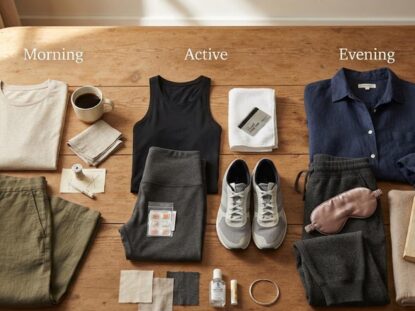
What we wear each day influences physical comfort, mental focus, and how we present ourselves to the world. Simple clothing choices can reduce stress, improve confidence, and make daily routines smoother. By prioritizing fit, fabric, and functionality you create a wardrobe that supports activity and rest. This article outlines practical strategies to align style with wellbeing without overhauling your entire closet.
Mindful Material Choices
Choosing the right fabrics has an outsized effect on comfort and longevity. Natural fibers like cotton, linen, and wool tend to breathe and regulate temperature, while many modern blends offer stretch and durability for active days. Consider how materials respond to movement, moisture, and repeated washing before adding pieces to your rotation. Prioritizing quality over quantity reduces clutter and helps you feel better in clothes that last.
Pay attention to fabric care labels and texture against skin, especially if you have sensitivities. Selecting pieces that require manageable maintenance encourages consistent use and avoids stress related to upkeep.
Functional Wardrobe Building
Building a functional wardrobe starts with versatile staples that mix and match easily. Neutral colors, adaptable layers, and well-fitting basics create more outfit options and simplify decision-making. Invest in a few reliable items that suit your daily activities, whether commuting, working from home, or exercising. A compact, coherent wardrobe reduces morning friction and supports a clear personal style.
Introduce accessories sparingly to refresh looks without buying new garments frequently. Thoughtful additions like a comfortable shoe or multipurpose jacket can extend usability across seasons.
Daily Habits and Garment Care
How you wear and care for clothing affects both appearance and environment. Regularly assessing fit, repairing small damages, and rotating items prevents premature wear and maintains confidence in your outfits. Simple habits like airing out garments, following care instructions, and consolidating laundry loads save time and energy. Adopting minor routines ensures your wardrobe remains reliable and comfortable over the long term.
Mindful shopping paired with conscientious garment care minimizes impulse purchases and supports sustainability. Over time these practices translate into clearer style decisions and less wardrobe waste.
Conclusion
Small, intentional changes to fabric choices, wardrobe structure, and care routines can significantly enhance daily wellbeing. Prioritizing comfort and function alongside aesthetics reduces stress and fosters confidence. With consistent habits, your clothing becomes a practical tool that supports a healthier, more enjoyable daily life.