Small clothing choices shape how your day feels from the moment you get dressed. Fabrics, fit and simple habits can reduce irritation, overheating, and constant adjusting. You don’t need to replace everything—tiny swaps add noticeable comfort. This article offers practical changes that help your clothes work for you all day.
Start with fabrics that feel good
Natural fibers like cotton, linen and some wool blends breathe and feel kinder to skin than stiff weaves. Soft knits—jersey, French terry or lightweight rib—move with you and reduce friction. When using synthetics look for blends that add stretch or moisture-wicking without sacrificing softness. Pay attention to linings and seam finishes, since many annoyances come from inside a garment rather than its outer face.
Choosing the right fabric reduces chafing and overheating and keeps layers pleasant against skin. A quick touch test in-store reveals more than labels do.
Prioritize fit for real life
Fit matters because it defines how clothing moves with your body rather than against it. Make sure shoulder seams align, and that sleeves and pant legs allow sitting, bending and reaching without pulling. Try on garments later in the day when your body is closer to its usual shape, and prefer adjustable waists or pieces with some built-in stretch. Avoid tight elastics that dig in or leave marks after a few hours.
- Stand and move while trying things on.
- Bring a pair of shoes to check hem lengths.
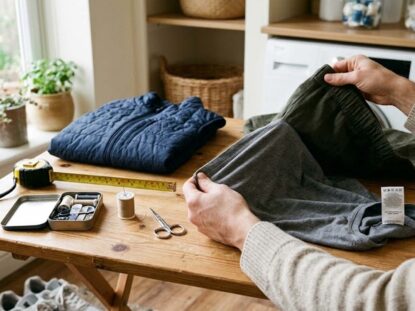
Small alterations—hems, tapering or taking in side seams—often fix most fit problems. Those modest tweaks make outfits far more comfortable across a full day.
Build a small collection of go-to pieces
Collect a compact set of reliable garments you actually wear: soft tees in a flattering cut, relaxed trousers with stretch, a light layering piece, and breathable underlayers. Neutral colors help mixing and matching so you reach for comfortable options first, reducing decision fatigue. Keep one or two specialty items—like a stretchy dress or a moisture-wicking top—for days that require them. The goal is versatility rather than volume.
- Soft crew or V-neck tees
- Relaxed, slightly stretchy trousers
- Light cardigan or overshirt
Having fewer, better-loved pieces makes dressing quicker and more reliable. Over time you’ll spot which items deserve replacement and which earn a permanent spot in rotation.
Easy habits that maintain comfort
Care and rotation preserve what keeps you comfortable: wash according to labels, avoid harsh detergents that roughen fibers, and let elastic-based items rest between uses. Pack a small emergency kit with a spare tee, blister patches and a lightweight layer if you have long days on your feet. Replace worn elastic or stretched straps before they fail; that prevents surprises and restores support quickly.
These tiny routines extend the life of favorite pieces and save money by avoiding premature replacement. Regular maintenance is often the difference between an item that comforts and one that irritates.
Conclusion
Comfortable dressing comes down to thoughtful fabric choices, attention to fit, a compact set of reliable pieces, and simple care habits. You don’t need a massive budget—small swaps and occasional tailoring make a big, everyday difference. Start with one change this week and notice how your clothes begin to support your day instead of distracting from it.