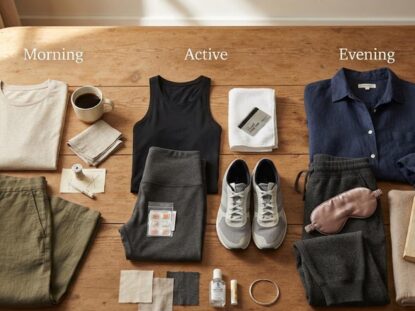
Thoughtful clothing choices shape how you move, feel, and present yourself throughout the day.
Small adjustments in fabric, fit, and layering can reduce friction, regulate temperature, and increase confidence.
A practical wardrobe balances comfort with durability so pieces work across activities and seasons.
This article outlines simple, actionable strategies to help you build a daily wardrobe that supports energy and wellbeing.
Choose Fabrics That Support Skin and Temperature
Selecting the right materials is the foundation of comfortable dressing. Natural fibers like cotton and linen are breathable and help with moisture management, while modern technical fabrics can wick sweat and dry quickly. Avoid coarse or stiff textiles that rub at seams and cause irritation during prolonged wear. Consider fabric blends that combine softness with stretch to maintain shape without restricting movement.
When shopping, check fabric weight and weave rather than just fiber labels. Lightweight, tightly woven fabrics can block wind without adding bulk, and knits often provide more give for active days. Prioritize breathability for everyday pieces and reserve heavier textiles for cooler conditions.
Prioritize Fit and Ease of Movement
A well-fitting garment supports posture and reduces unnecessary adjustments during the day. Aim for clothes that follow your silhouette without compressing; look for slight ease at joints and across the chest and hips. Pay attention to shoulder seams, sleeve length, and rise in pants—small mismatches can cause discomfort or restrict mobility. Tailoring inexpensive pieces can transform fit and extend their useful life.
Try on garments with the activities you’ll do in mind, such as reaching, sitting, or cycling. Choose adjustable elements like waist ties, elastic panels, or stretch panels to accommodate fluctuating comfort needs. Thoughtful fit choices create clothing that works for long days and varied routines.
Layering and Versatility for Changing Days
Layering lets you adapt to temperature swings and different settings without sacrificing comfort. Base layers should be close-fitting and moisture-managing, while mid-layers provide insulation and outer layers protect against wind or rain. Versatile pieces that transition from casual to slightly dressier increase the usefulness of each item and reduce wardrobe clutter. Color coordination and neutral tones make mixing pieces simpler and more consistent.
Build a core capsule of reliable layers and add a few statement pieces to refresh outfits. This approach keeps daily choices simple while ensuring you feel comfortable in varied environments.
Care, Rotation, and Sustainable Habits
Proper care extends the life of comfortable garments and preserves their performance qualities. Follow care labels, use gentle detergents for delicate fibers, and air-dry when possible to prevent shrinkage and fiber breakdown. Rotate frequently worn items to reduce wear patterns and allow fabrics to recover between uses. Investing a little time in maintenance saves money and keeps your wardrobe feeling fresh and comfortable.
Plan purchases around long-term needs rather than impulse trends, and repair or tailor before replacing. Small, sustainable habits support both comfort and responsible consumption over time.
Conclusion
Comfortable dressing starts with mindful choices about fabric, fit, and versatility.
Simple adjustments and good care routines help clothes serve you better every day.
Designing a thoughtful wardrobe supports energy, movement, and lasting wellbeing.