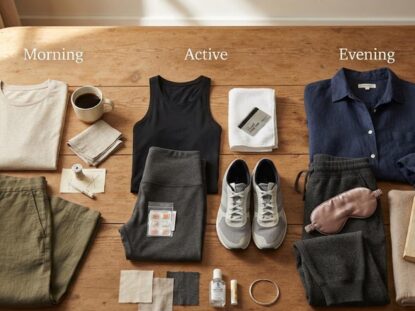
Cultivating a wardrobe that feels good and lasts requires both intention and small everyday habits. When clothing choices prioritize comfort, fit, and mindful materials, they support wellbeing alongside style. This piece outlines practical approaches to build a timeless, healthy wardrobe without overwhelming your routine. Use these steps to make shopping, caring, and dressing more sustainable and satisfying.
Core Principles of Healthy Fashion
Healthy fashion centers on fit, fabric quality, and functionality rather than trends. Choosing breathable, non-irritating materials and properly fitting items reduces wardrobe waste and keeps you comfortable throughout the day. Prioritizing versatile pieces also means fewer purchases and more consistent wear. These principles align personal wellness with thoughtful consumption choices.
- Focus on natural or blended fabrics for breathability.
- Choose cuts that allow movement and confidence.
- Prefer neutral palettes that mix easily.
Adopting these guiding ideas simplifies decision-making and encourages longevity. Over time, this approach reduces clutter and improves day-to-day comfort.
Building a Versatile Wardrobe Foundation
Start with a small collection of reliable basics that suit your lifestyle and climate. A few well-chosen tops, bottoms, and outer layers that interchange smoothly form the backbone of versatile dressing. Invest where it matters—items you wear most—while saving on occasional pieces. This balanced approach keeps your closet functional and focused.
Assess what you actually wear and remove duplicates or rarely-used items. A curated foundation supports more creative styling without excess shopping.
Care Practices That Extend Garment Life
Proper care is one of the most effective ways to keep clothing attractive and functional longer. Follow label instructions, wash gently when possible, and repair small issues like loose buttons or minor frays promptly. Storing garments correctly—folding knits, hanging structured pieces—also prevents premature wear. Simple maintenance habits save money and reduce environmental impact over time.
- Use mild detergent and low-heat drying.
- Learn basic mending to fix small damages.
- Rotate wear to avoid overuse of favorites.
Routine attention to garments makes a visible difference in how long they remain useful. It also reinforces mindful consumption by valuing what you already own.
Shopping with Intention
When you do shop, prioritize quality over quantity and ask whether an item fills a real gap in your wardrobe. Consider how a piece will pair with existing items and whether it aligns with your comfort and care preferences. Setting a simple buying criterion—such as fit, fabric, and versatility—prevents impulse buys that get discarded. Thoughtful shopping supports a cohesive, long-lasting closet.
Keep a running list of needs to avoid repeated mistakes. Over time, deliberate choices cultivate a wardrobe that reflects your lifestyle and values.
Conclusion
Healthy wardrobe habits combine mindful purchasing, proper care, and a focus on fit and materials. Small, consistent practices reduce waste and enhance daily comfort and confidence. Adopt these approaches to build a timeless, practical wardrobe that supports wellbeing and style.