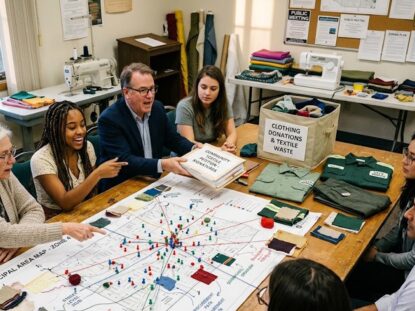
Municipal decisions increasingly shape how garments are produced, sold, and disposed of. City halls set permits, procurement standards, and zoning rules that ripple through designers, factories, and retail. Those local moves can advance worker protections, reduce waste, or steer investment into cleaner technologies. Understanding these levers helps residents see how everyday policy affects what ends up in closets.
How Local Rules Affect Fashion Supply Chains
Local ordinances determine where factories can operate, what inspections must occur, and which businesses receive tax breaks. Those choices alter costs for manufacturers and can make compliance easier or harder for small makers. Zoning for industrial clusters can attract suppliers, while strict enforcement of labor and environmental rules raises standards across the board. Over time, these municipal decisions nudge the industry toward different business models and sourcing relationships.
- Zoning: concentrates production or disperses it across neighborhoods.
- Procurement: city purchasing can prioritize ethical suppliers.
Even modest changes at the city level compound as companies adapt to local expectations. A cluster of cities with aligned rules often prompts larger brands to update national policies.
Tools City Governments Use to Shape Industry Behavior
Local governments have a surprising toolkit: procurement standards, licensing requirements, waste-management rules, and incentive programs. Public institutions that demand transparency or minimum labor standards create market signals that ripple upstream. Incentives like grants or technical support can make sustainable practices financially viable for small manufacturers. Enforcement, when consistent, converts policy into measurable change.
- Procurement policies that require supply-chain reporting.
- Grants for textile recycling or small-scale production upgrades.
- Licensing tied to compliance with labor and environmental rules.
These tools work best when paired with clear timelines and measurable outcomes. Policymakers who engage businesses early reduce unintended costs and improve uptake.
What Consumers and Advocates Can Influence
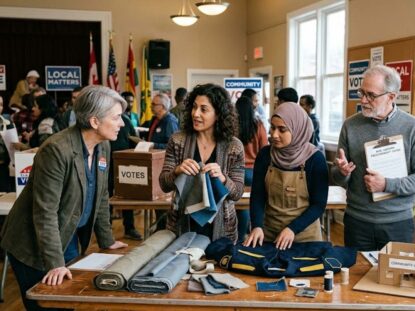
Civic groups and consumers shape priorities by raising issues at council meetings, signing petitions, and supporting local brands. Advocacy helps translate community concerns into policy wins like stronger storefront regulations or municipal textile-reuse programs. Consumers also signal demand through buying choices and by supporting transparency campaigns. Local press coverage and targeted research make it harder for policymakers to ignore systemic problems.
Working locally yields faster feedback than national campaigns and creates models other jurisdictions can copy. Practical, community-rooted efforts often turn into the policy experiments that scale.
Conclusion
City-level decisions quietly steer the fashion industry toward more equitable and sustainable practices.
Action by councils, advocates, and consumers can change incentives and corporate behavior.
Local experiments offer practical policy pathways that larger governments can adopt.