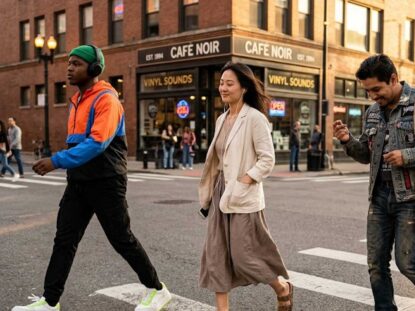
Street festivals are where music, food, and spontaneous style meet for a few charged hours, and their influence tends to linger well past the weekend. Attendees and performers mix practicality with playfulness, trying bold colors, experimental layers, and fabrics that move with a crowd. Those snapshots—captured on phones and shared across feeds—feed back into what people feel comfortable wearing in their daily lives. Observing that feedback helps explain why certain looks feel fresh one season and pedestrian the next.
Music, Movement, and Materials
When live sound and movement dominate a public space, garments that catch light or sway naturally get noticed. Designers and makers often respond by emphasizing textures—sheer panels, metallic threads, and loose silhouettes—that translate choreographically. Fabrics that breathe and recover from long days are favored, which nudges small labels toward blends and finishes that balance showmanship with wearability. This results in a steady trickle of festival-friendly details into mainstream collections.
That trickle doesn’t always arrive as whole outfits; more often it shows up in accents and construction choices. An oversized pocket, a detachable panel, or a reflective trim can travel from a weekend look to weekday wear without feeling out of place. These micro-adaptations keep wardrobes feeling current without demanding a complete overhaul.
How Streets Feed Runway Decisions
Runway houses and independent brands alike scan the streets for energy and color palettes that resonate with real people, not just editors. Tailoring choices often loosen after seasons where street-level dressing favors movement over stiffness, while color stories can shift toward high-contrast brights following eye-catching festival trends. The cycle is pragmatic: if consumers embrace a functional novelty, larger lines incorporate it in scaled forms that retail more easily.
Retailers then play a curatorial role, selecting which festival-born elements are saleable and which remain niche. That selection process refines the raw, often theatrical looks into accessible options that shoppers can adopt without a lifestyle reset. The result is a steady democratization of style cues.
Practical Takeaways for Your Closet
Look at what people are wearing at local events and ask which pieces you’d actually reach for during a busy week. Prioritize one or two statement elements—like a lightweight shacket or a high-contrast accessory—and integrate them with staples you already own. Choose fabrics that tolerate movement and variable weather to maximize wear across multiple occasions.
Small updates keep your wardrobe adaptable and prevent costly, short-lived purchases. By borrowing selectively from festival aesthetics, you benefit from fresh energy without losing the cohesion of a reliable personal style.
Conclusion
Street festivals act as short, intense laboratories for style, testing what works in motion and under scrutiny. Those experiments often filter into everyday fashion as subtle details rather than wholesale trends. Paying attention to what survives the transition helps you refresh your look thoughtfully and affordably.