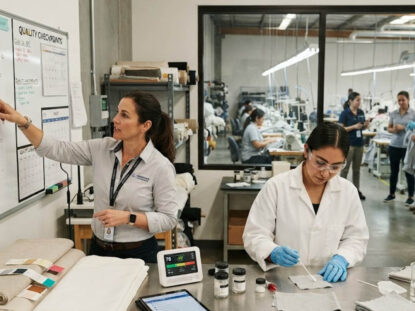
Growing a fashion business with sustainability at its core requires deliberate choices across design, sourcing, and operations. Consumers increasingly seek transparent practices, and brands that adapt can win loyalty while reducing environmental impact. This article outlines practical steps founders and managers can take to integrate greener methods without sacrificing scale or profitability. The guidance emphasizes measurable actions, supplier collaboration, and product thinking that extends a garment’s useful life.
Each suggestion is aimed at making sustainability operational rather than aspirational, encouraging small, testable changes that compound over time. By focusing on design, materials, and partnerships, businesses can balance ethics with growth. Practical metrics and pilot programs make progress visible and manageable.
Designing for Longevity
Prioritize designs that encourage extended use: classic silhouettes, modular elements, and easy-repair features reduce the churn of seasonal waste. Pattern efficiency and minimal trim choices lower material loss during cutting, and designing for disassembly supports future recycling. Incorporating user feedback into fit and durability testing helps avoid returns and dissatisfied customers. Prototyping with real wear-testing provides data to refine designs before full production.
Commit to a small set of core styles that can be adapted seasonally rather than fully replaced each cycle. This approach reduces development costs and highlights quality over quantity. Encourage repair guides and offer repair services to reinforce longevity messaging.
Responsible Materials and Sourcing
Choose materials with clear environmental benefits and verified credentials, and weigh total lifecycle impacts rather than single attributes. Build supplier relationships that support traceability and continuous improvement, and ask for material data sheets and processing information. Consider recycled fibers, regenerated cellulosics, and lower-impact dyeing processes to reduce resource intensity. Small-batch trials of alternative materials help validate performance and consumer acceptance before scaling.
Mapping a material’s origin and processing steps improves transparency and supports marketing claims. Long-term contracts and collaborative improvement plans motivate suppliers to invest in cleaner technologies. Use third-party certifications selectively to back important claims.
Operational Practices and Partnerships
Adopt production models that align supply with real demand, such as made-to-order or limited runs, to minimize excess inventory. Optimize logistics and packaging to reduce emissions and waste, and pursue energy efficiency in offices and production sites. Implement take-back programs or repair networks to close material loops and strengthen customer relationships. Partner with local manufacturers or shared facilities to reduce transport and support community resilience.
Measure key performance indicators like waste per unit, on-time delivery, and return rates to track progress. Collaborations with recyclers, NGOs, or technology providers can accelerate capability building. Pilot programs allow teams to test changes without major upfront investment.
Conclusion
Greener growth is achieved through incremental, measurable changes across design, sourcing, and operations. Small pilots, transparent supplier partnerships, and a focus on product longevity yield both environmental and business benefits. Choose a few priorities, track results, and scale what works to build an enduring, responsible brand.